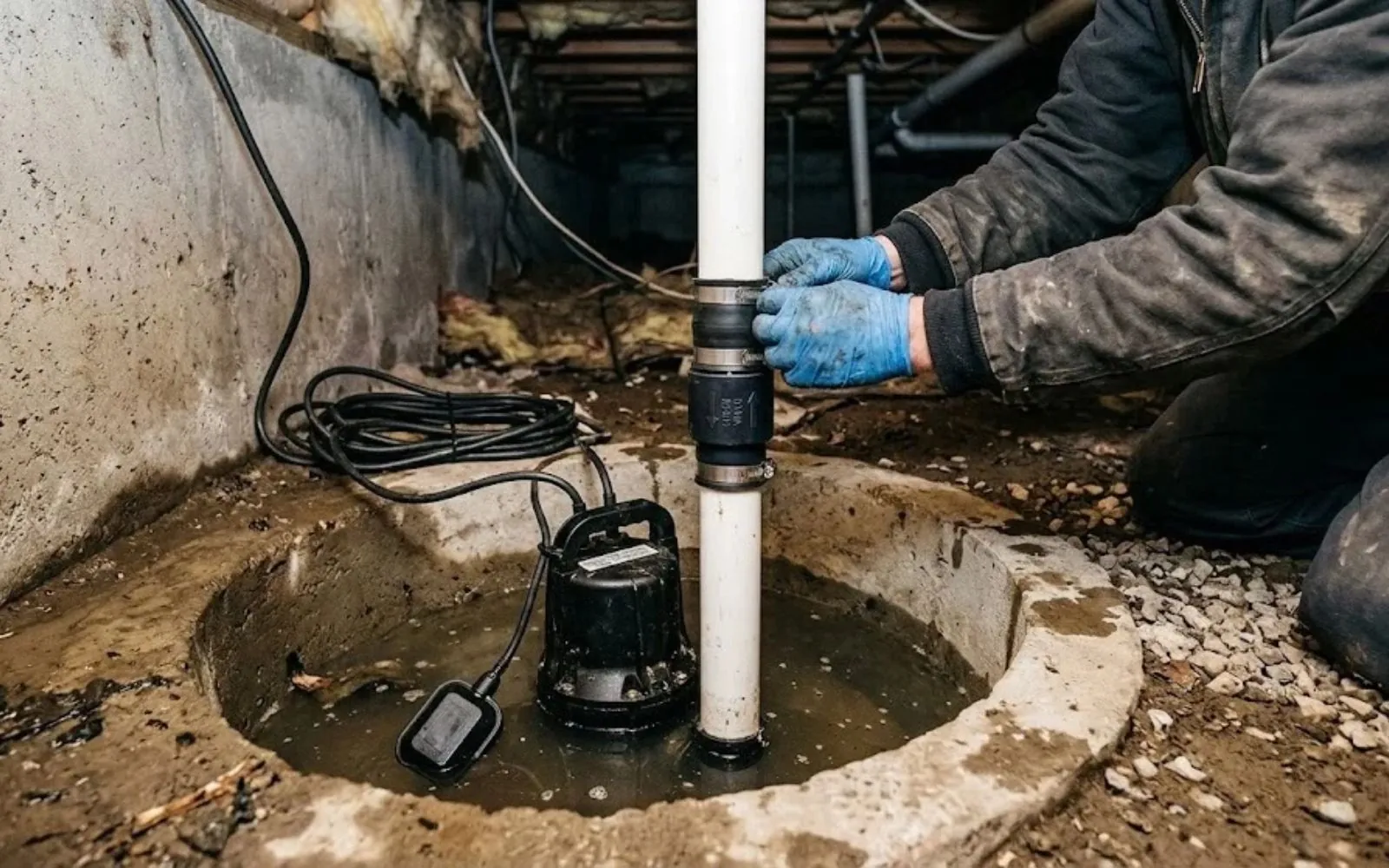
Emergency Sump Pump Repair in Gainesville, FL
Sump pump repair covers the pumps that move water out of places it can't drain by gravity. That means a crawlspace or garage pit, a basin under a below-grade bathroom, or the pump tank on some septic systems. We repair, replace and test the pump, float switch, check valve and discharge line.
A pump that quits during a summer downpour is an emergency, and the line is answered 24/7.
Where Gainesville homes have pumps
Basements are rare in Gainesville, so most homes never need a sump pump. The ones that do usually fall into one of three groups, and it helps to know which you have before calling.
The first is a drainage sump, a pit in a crawlspace, a sunken garage or a low utility room that collects groundwater and storm runoff. Older raised homes, like many in the Duckpond and the other historic districts near downtown, sometimes have one under the floor. So do houses on low lots near Hogtown Creek in northwest Gainesville.
The second is a sewage ejector pump, which lifts waste from a bathroom or laundry set lower than the sewer line. The third is an effluent pump in a septic system, which pushes treated water from a pump tank up to a drain field. Those are common on rural lots across the county and are covered with routine septic service.
Emergency sump pump repair: pit full and pump not running
A sump pump that stops during a storm can put water on the floor in minutes. A pit full to the rim, a pump that hums without moving water, or a float stuck against the side are all calls for the same night.
Standing water near an electrical room or panel adds a second risk. Stay out of water that could reach outlets, and mention it on the phone so we can plan the visit.
Safe checks before we arrive
- Check that the pump is plugged in and the breaker has not tripped.
- Look at the float from a dry spot and free it only if you can do so without touching the water.
- Move belongings off the floor and away from the pit.
- Never stand in water to test a pump.
Signs your pump needs attention
- The pit is full and the pump isn't running. Usually the float is stuck or the motor has failed.
- The pump runs nonstop. A stuck float switch or a broken check valve lets water cycle back in.
- It turns on and off every few seconds. Often a failed check valve or a float set too tight.
- Loud grinding or rattling. A worn impeller or debris caught in the intake.
- A high-water alarm is sounding. On an ejector or effluent pump, stop using water and call.
Three kinds of pumps, three different problems
| Pump | What it moves | Most common failure |
|---|---|---|
| Drainage sump pump. | Groundwater and storm runoff from a pit.. | Stuck float or clogged discharge line.. |
| Sewage ejector pump. | Waste from fixtures below the sewer line.. | Clogs from wipes, then motor burnout.. |
| Septic effluent pump. | Treated water from a pump tank to the drain field.. | Failed float or control panel after a storm.. |
If an ejector basin backs up into the house, stop running water. Sewage indoors needs cleanup as well as a pump repair, and main drain cleaning clears the line once the pump is working.
Storm season is when pumps get tested
Gainesville gets most of its rain in summer thunderstorms and the occasional tropical storm, often in heavy bursts. That's when a drainage pump that has sat idle for months is suddenly asked to run for hours, and when power outages are most likely.
A pump with no power is no pump at all. A battery backup or a high-water alarm costs far less than the water damage from an overflowing pit, and it's the upgrade we recommend most often.
How a sump pump repair goes
- Find out what failed. We test the float, the motor, the check valve and the discharge line one at a time.
- Clear the pit. Silt, gravel and debris come out so the float can move freely.
- Repair or replace. A switch or valve is often enough. A burned-out motor usually means a new pump.
- Test it with water. We fill the pit and watch it cycle, start to finish, before we leave.
What affects sump pump pricing
- Pump type. Sewage ejector and effluent pumps cost more than a basic drainage pump.
- Access. A pit in a tight crawlspace takes longer than one in a garage floor.
- Add-ons. Battery backups, alarms and new discharge lines add to the job.
Want your real number? Call (954) 697-4920. Replacement estimates are free.
When a pump problem is really something else
Sometimes the pump is fine and the water is coming from a plumbing leak. A pit that fills on a dry day can point to a broken supply line nearby, which emergency burst pipe repair handles.
And if water has already spread across floors, the pump is only part of the job. Drying out the structure quickly is what prevents mold, and that's a separate service from the repair.
According to: general sump, ejector and effluent pump operation per manufacturer installation guidance.
Sewage pumps and utility pumps
Some callers need a sewage ejector pump replaced rather than a sump pump. A pump that moves waste has a different design, so it is a separate quote.
Standing water in an electrical room or a low garage is a reason for a same-night visit. We install the pump, the check valve and the discharge so water leaves the house for good.
Sump pump questions
Most don't, because basements are rare here. Homes with a crawlspace pit, a sunken garage, a below-grade bathroom or a pumped septic system do, and those pumps need checking like any other equipment.
Many last somewhere around seven to ten years, depending on how often they run. A pump that runs every storm season wears out sooner than one that rarely cycles.
Pour a bucket of water slowly into the pit. The float should rise, the pump should start, and the pit should drain and shut off on its own. If it doesn't, call before the next storm.
No. Sump water should discharge outside, away from the house. Most sewer utilities prohibit connecting it to the sanitary sewer, because storm water overloads treatment plants.
A sump pump moves clear water from a drainage pit. An ejector pump moves sewage from fixtures below the sewer line and has a sealed basin. They aren't interchangeable.
Usually the landlord, since it's part of the building's plumbing and drainage. Report it right away in writing, especially if water is coming in.
For a pump that protects living space, yes. Power outages and heavy storms tend to arrive together, and a backup keeps the pit draining while the power is out.
Yes. A pit that is full with a pump that will not run is a same-night call. Stay out of water that could reach outlets and call.